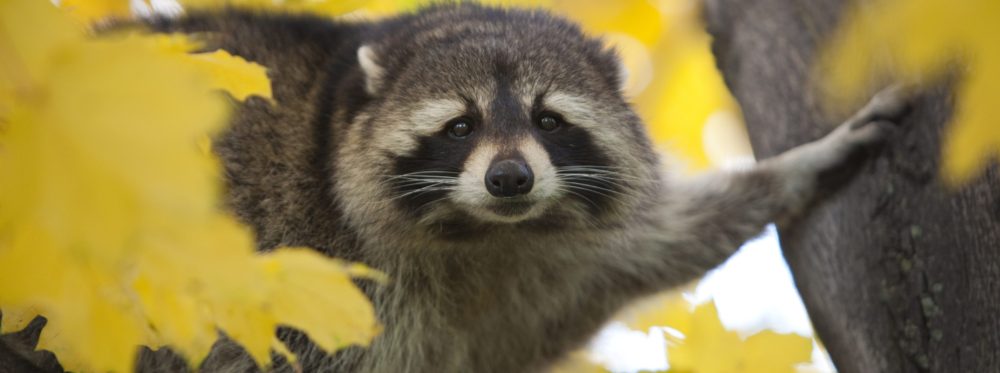
As the temperatures drop across the Bluegrass State, we aren’t the only ones looking to stay cozy indoors. While a fire in the fireplace or a warm blanket makes winter bearable for us, our local wildlife is seeking similar comforts. Unfortunately, for many Kentucky homeowners, this search for warmth leads raccoons straight into attics, chimneys, and crawl spaces.
Hearing the heavy thumping of a raccoon overhead isn’t just a nuisance that keeps you awake at night; it is a stressful situation that poses real risks to your property and health. Raccoons are intelligent, persistent, and capable of causing significant damage in a short amount of time.
Navigating wildlife control requires a balance of empathy for the animal and a firm commitment to protecting your home. Whether you have already spotted a masked bandit near your trash cans or suspect one has moved into your eaves, understanding their winter habits is the first step toward a solution.
This guide will walk you through raccoon behavior during Kentucky winters, legal prevention methods, and when it is time to call in an expert.
Understanding Raccoon Behavior in Winter
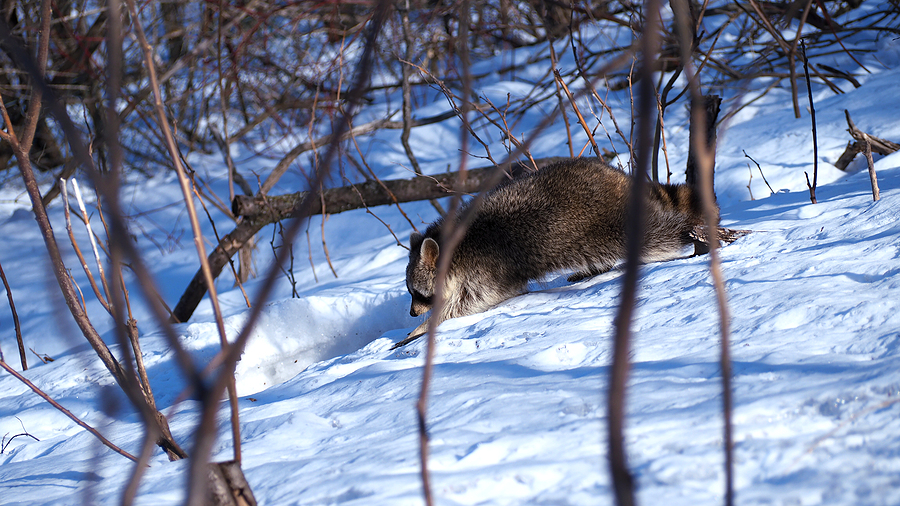
A common misconception is that raccoons hibernate during the cold months. While bears might sleep the winter away, raccoons in Kentucky remain active, though their behaviors change significantly to conserve energy.
Raccoon Hibernation
No, raccoons do not true hibernators. Instead, they enter a state called torpor. According to the National Park Service, torpor is a period of inactivity where an animal sleeps for days or weeks at a time to survive extreme cold. During this state, they slow down their heart rate, breathing, and metabolism.
However, unlike true hibernation, raccoons can wake up quickly. On milder winter days in Kentucky, you might still see them foraging for food. This biological need for a safe, temperature-controlled environment during torpor is exactly why your attic—with its insulation and protection from the wind—is so appealing to them.
What Raccoons Look For
In the wild, raccoons seek out hollow trees, ground burrows, or brush piles. In suburban and urban areas, our homes mimic these structures perfectly. They are looking for:
- Warmth: Heat rising into the attic makes it a tropical getaway compared to the freezing outdoors.
- Security: Mothers may be looking for a safe place to eventually rear young (though birthing season is typically later in spring).
- Food proximity: Access to pet food left on porches or unsecured trash cans.
Prevention Strategies: Fortifying Your Home
The most effective way to handle a raccoon problem is to stop it before it starts. Exclusion techniques are designed to seal off your home from unwelcome visitors.
Inspect and seal entry points
Raccoons are incredibly dexterous and can squeeze through surprisingly small openings. You should inspect your home’s exterior for any gaps. The University of Kentucky Cooperative Extension Service recommends installing one-fourth-inch wire mesh (hardware cloth) over attic, roof, and crawl space vents. This material is sturdy enough that raccoons cannot easily chew through it.
Cap your chimney
An open chimney is an open invitation. Raccoons are excellent climbers and view chimneys as hollow trees. Installing a professional-grade chimney cap is one of the single most effective animal deterrents you can invest in.
Remove attractants
You must make your property less appealing to foraging animals.
- Secure trash: Use heavy-duty bins with locking lids or keep trash inside a garage until pickup day.
- Pet food: Never leave dog or cat food outside overnight. This is a primary draw for raccoons.
- Yard maintenance: Clear brush piles and trim tree branches that hang over your roof, as these act as bridges for raccoons to access your upper levels.
Book Emergency Raccoon Removal Service in Louisville ✏
Safe and Legal Raccoon Removal Methods
If a raccoon has already established a den in your home, eviction becomes more complicated. In Kentucky, wildlife is a public-owned resource protected by state laws, but homeowners do have rights when damage is occurring.
Kentucky Wildlife Laws
According to Kentucky Revised Statute KRS 150.105, landowners are permitted to control animals that are causing damage to their property. However, this must be done within the confines of the law.
- No pets: It is illegal to keep high-risk rabies wildlife, including raccoons, as pets in Kentucky.
- Trapping regulations: If you choose to use a trap, you must check it at least once every 24 hours to prevent animal suffering.
- Relocation risks: Moving an animal might seem humane, but it is often discouraged or illegal without a permit because it spreads diseases like rabies and distemper to new areas.
Humane Extraction Methods
Before resorting to traps, you can try to encourage raccoons to leave on its own by eliminating favorable conditions for them.
- Light: Place a bright light in the attic or crawl space. Raccoons prefer the dark.
- Sound: A radio set to a talk station can disrupt their sleep and make them feel unsafe.
- Scent: Commercial deterrents or cider vinegar-soaked rags may make the space smell unappealing.
- Note: Never seal an entry point until you are 100% certain the animal is out. Sealing a raccoon inside will result in significant damage as it tries to escape, or a deceased animal in your walls.
When to Call a Professional Raccoon Control Service
While DIY methods can work for prevention, active removal is often dangerous. Raccoons are wild animals that will defend themselves aggressively if cornered.
Health risks
Raccoons are a primary carrier of rabies in Kentucky. As noted by the Kentucky Department of Fish and Wildlife Resources, you should never approach or handle a raccoon, especially if it is acting strangely. Rabies is 100% fatal in humans if untreated. Additionally, raccoon feces can contain roundworm eggs that are hazardous to humans and pets.
Complex scenarios
You should seek professional help if:
- Babies are present: If you hear high-pitched chirping or crying, there may be a nest of kits. Removing the mother and leaving the babies is inhumane and will result in them dying in your home.
- The animal is aggressive: If a raccoon does not retreat when it sees you, do not engage.
- Structural damage: If the animal has damaged wiring, insulation, or ductwork, a professional can not only remove the animal but often help with the remediation and repair process.
Conclusion
Dealing with raccoons in the winter requires a mix of vigilance and caution. By understanding that these animals are seeking warmth through torpor, you can better predict their behavior and block their access points. Remember that while Kentucky law allows you to protect your property, safety—both yours and the animal’s—should always be the priority.
If you are hearing noises in your attic or suspect a raccoon has taken up residence, don’t wait for the damage to worsen. The risks associated with rabies and structural damage are too high to ignore.
Need help with raccoon removal in Louisville? If you are located in the Louisville area and need expert assistance, we are here to help. Our team specializes in humane, safe, and effective raccoon removal and damage repair. Contact Us Today to reclaim your home from winter wildlife.
Related Post: Hibernation Station: Understanding Winter Torpor in Raccoons