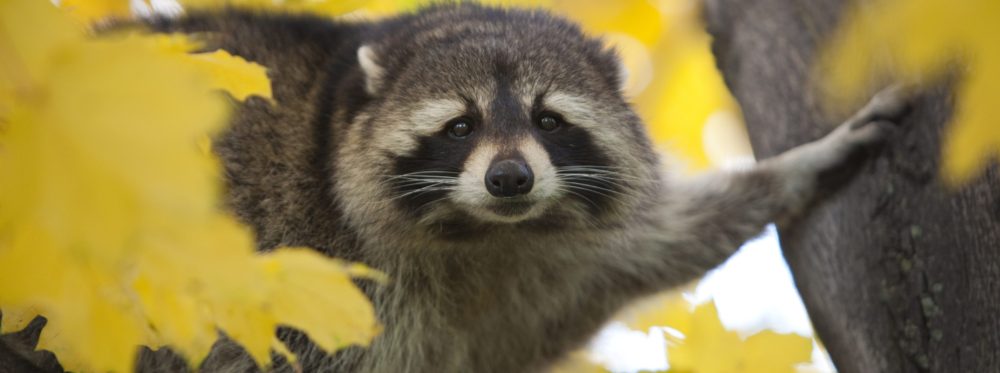
Are Raccoons Actually Dangerous?

Spotting a wild raccoon can be startling, especially if they are seen on your own property. Raccoons are wild animals, and should not be trusted. To say they are dangerous might be an over exaggeration; however, that does not mean they are safe. Continue reading to learn the safety concerns associated with wild raccoons, and how to handle a raccoon encounter if you are ever face to face with one.

Raccoons Can Carry Diseases

One major safety concern with raccoons, or any wild animal, is the possibility that they may be carrying an infectious disease. Raccoons are known to be carriers of various bacterial and viral infections. Rabies, Canine Distemper, Parvo, and Leptospirosis are among a few of the most common diseases they can carry. With one bite or claw scratch, a raccoon can pass these infections to children, adults, and even pets. This is just one other reason to steer clear of wild animals, including raccoons.

Raccoons Can Show Aggression

Although raccoons are not known to attack humans and other animals without provocation, it is not beyond their animal capabilities. If a raccoon feels threatened, or feels their young are in danger, they can attack. Raccoons have long sharp teeth and claws that can be fatal for small outdoor pets such as cats and dogs. They can also bite, passing on infectious diseases like the ones mentioned above. Their saliva and urine are danger zones for disease, and they can use both of these as self-defense against a
human or other animal. So do not provoke
or even approach a wild raccoon.

How to Protect Yourself from Wild Raccoons

If you frequently see wild raccoons on your property, either rummaging through garbage or grub hunting in the backyard; be sure to call a professional for advice. A professional animal control technician, especially one that specializes in raccoons, can offer accurate and helpful advice and services for raccoon removal and prevention. These experts retain the proper tools and equipment to facilitate a safe and effective raccoon removal job, fast.

They can also diagnose what may be attracting the raccoons to your property, and eliminate any future problems. Experience and industry knowledge are crucial when it comes to getting rid of raccoons on residential properties, which is why it is highly recommended to consult a professional for help with a raccoon problem. It can be very dangerous dealing with raccoons without the proper gear, equipment, and training.

Louisville Raccoon Removal

Call 502-553-76622 for Louisville raccoon removal you can trust. We are DNR licensed and insured raccoon control experts with over 20 years of experience in the raccoon industry. We have all the latest technologies and equipment to carry out safe and humane raccoon control and cleanup jobs. Call 502-553-76622 to speak with a live raccoon control specialist today! Request a free estimate for raccoon removal in Louisville, Kentucky and its surrounding areas.

Can Raccoons Carry the Ebola Virus?

With all the hype over the recent Ebola scares and close-encounters, it’s no wonder everyone is asking about wild animals, namely raccoons, and the diseases they may carry. Many people associate Rabies with raccoons. This is because they, along with several other species of mammal, are known carriers of the virus. Other common diseases commonly carried by or associated with raccoons includes Leptospirosis, Histoplasmosis, roundworm, canine distemper, lice, and other parasites.

Although ‘coons can carry a wide range of diseases, Rabies is the most prevalent disease associated with the species. And with this virus being commonly connected with coons, it has caused new rumors about new viruses, including Ebola. There is a reason why these species have been recently connected to the E-virus, and it has mostly to do with Rabies. Continue reading to learn what this connection means and where it stems from in the first place.

Ebola and Rabies

Raccoons are being questioned when it comes to the recent Ebola outbreaks in the United States mostly due to the fact that they are known carriers of the Rabies virus; a virus that share much of the same qualities as Ebola. This is why people are talking about raccoons and Ebola. When a mammal is infected with the E-virus, they show similar symptoms as would a mammal infected with the R-virus. Now the truth is, raccoons could very easily contract the E-virus, just as they could Rabies; however, it would be difficult to do. So the likelihood of a coon having Ebola is slim. It is not like spreading a cold or flu, where a simply cough or sneeze can cause another person to get sick.

In order to become infected with either diseases, direct bodily fluid must be exchanged; and it’s also rare to come in contact with the E-virus in the first place. Here in the United States, we retain ample medical centers, doctors, nurses, staff, modern medicine, technology and more to contain and treat any such virus. It is not a threat to worry about, ever. Still, you should never try to touch a wild animal of any kind, as they may be carriers of other transmittable diseases.

Raccoon Exclusion Services

Contact a professional wildlife removal and control company for proper animal removal services and preventative maintenance. Be sure to use a licensed and experienced raccoon control company that only uses safe and humane methods to extract coons and prevent their return. These special and misunderstood mammals should never be harmed, trapped, or killed under any circumstances. A trusted animal control company will relocate them to a faraway and safe habitat where they can thrive in peace.

Louisville Raccoon Removal and Control

Call 502-553-7622 for professional raccoon removal services in Louisville, Kentucky and its surrounding areas. We offer a wide range of residential and commercial raccoon control services at the most affordable prices in town. Our DNR licensed and insured wildlife contractors are happy to answer your questions about raccoon removal and control, anytime. We offer emergency services, free estimates, and more. Call 502-553-7622 to request free estimate for Louisville raccoon removal, today.

Call Raccoon Removal Louisville for Affordable Pre-Winter Nuisance Wildlife Prevention

Raccoon-Proofing and Control at a Great Price!

Raccoon Removal Louisville wants to help you get your home and surrounding property prepared for nuisance animal activity and damage. This time of year, nuisance animals like raccoons, bats, skunks, opossum, squirrels, and more, are in serious hunt-mode for a place to nest and hibernate for the winter. They find small openings in roofs, soffits, planks, siding, and more, and then access the inner areas of your home, such as attics, crawl spaces, porches, walls, and more. It is critical to the structural integrity and safety of your home to have any vulnerable areas sealed and protected before wild animals stop by your house for a look around!

But it’s not just the inside you have to worry about, wild raccoons will also trespass and damage your exterior property if there is something there they want. Raccoon-proofing and control is the best strategy for preventing raccoon problems, infestations, and costly repairs. For this reason, it is important to have us implement a few other preventative methods, including free raccoon control advice.

Why Should You Choose Us?

Residential and Commercial Raccoon Control!

Here at Raccoon Removal Louisville, we are licensed by the Department of Natural Resources and retain decades of experience in the wildlife rescue and control industry. Our company offers a wide range of residential and commercial raccoon control services, including raccoon removal, extraction, exclusion, cleanup, and even minor restorations for raccoon damages. When it comes to raccoon proofing, we make sure all openings and vulnerabilities are sealed up before the dead of winter is here! Call 502-553-7622 to speak with a licensed contractor about raccoon removal and control in Louisville, Kentucky today.

Common Parasitic Diseases Found in Raccoons

Raccoons, like most wild animals, are susceptible to a long list of illnesses. And most of them are contagious and even fatal. But not all raccoon diseases are caused by a bacteria or a virus; some illnesses are caused by tiny little organisms called parasites. And these illnesses are called Helminth diseases. Continue reading to learn which parasitic diseases are commonly found in raccoons, and how to safely manage a raccoon problem on your property.

Roundworm

Roundworm is one of the most well-known parasitic raccoon diseases. Scientifically referred to as Baylisascaris Procyonis, raccoon roundworm are visceral (ingested and migrate through inner organs) and cutaneous (skin-deep, limited migration) larval migrans that can infect mammals via skin penetration or oral egg ingestion. Although it causes few problems for infected raccoons, roundworm is very harmful to dogs, cats, and even humans. Treatment is required immediately to reduce implications and begin healing right away. And since it is easily transferable, it is important to keep your pets vaccinated against roundworm and other parasitic diseases, and to take proper precautions to control wildlife intrusion on your property.

Toxoplasmosis

Toxoplasmosis is a common protozoal disease that can quickly infect and kill raccoons. It comes from one of the world’s most common one-celled parasites called the Toxoplasma Gondii parasite, or Toxoplasmagondii (T. Gondii). This parasite reproduces exclusively in the cat family, so Felids are definitive hosts. They are also the only species that pass infected eggs in their feces. Infected cat feces contains infectious microbial oocysts, which can be transmitted to other mammals. In humans, symptoms are flu-like (fever, muscle aches, sore throat, swollen nodes, etc.) and generally dissipate after a few weeks without any needed treatment. Raccoons and other animals can become infected of the parasitic disease, but they cannot excrete infectious agents in their feces. Raccoons generally become infected by ingesting the infectious agent, whether in undercooked meat or in cat feces. But it is also frequently associated with immunosuppression from canine distemper, which is a common raccoon viral infection.

The best method for preventing illness caused by raccoons it to get rid of raccoons, altogether! Talk to a licensed and experienced wildlife control company about raccoon removal services in your town.

Louisville Raccoon Removal Services

Call 502-553-7622 for safe and humane 24 hour raccoon removal and control in Louisville, Kentucky. We are DNR licensed and insured wildlife rescue contractors that provide a wide range of services for residential and commercial properties. Whether you have a raccoon in the attic or require raccoon-proofing, we are the professional raccoon removal contractors to trust for outstanding service at an affordable price. Call 502-553-7622 to request free estimate for Louisville raccoon removal services, today.

Although We Remove Raccoons, We Love and Support Them!

Raccoon Removal and Control 502-553-7622

Raccoon Removal and Control 502-553-7622

It is common for people to misunderstand the stance of those who work for raccoon removal companies. Many believe that wildlife removal contractors are the bad guys, and only wish to get rid of raccoons in a lethal or inhumane way. But this is far from the truth! Wildlife removal contractors want nothing more than the preservation and protection of wild animals, especially raccoons! That is why they are commonly referred to as wildlife “rescue” and control companies. Their intentions are nothing but good, and their stance on wildlife is not what many assume.

We Believe They are Innocent

Raccoons, and other wild animals, are becoming more and more of a nuisance in urban and suburban areas, but this is not their fault! And wildlife control contractors know this and believe this. Over-development, and other environmental factors, have pushed animals out of their natural habits, thus forcing them to find food, water, and shelter where they can. And they can usually find it right in our very own communities. So in essence, it’s actually our own fault that raccoons are becoming an increasing nuisance.

We Use Safe, Humane, and Non-Lethal Methods

Since raccoons can cause a tremendous amount of mess and damage, and even carry infectious diseases, you don’t want them inside your home or commercial building. And that is one of the main purposes of a wildlife control specialist. We make sure raccoons are removed safely and humanely by using safe and non-lethal methods of raccoon extraction. Then we comfortably relocate them to a far-away habitat that’s safer for them to live. We never harm or kill raccoons under any circumstances. The safety and comfort of our clients is the other reason we do what we do. We want to make sure both raccoons and humans are protected from each other.

We Support Preservation and Protection

Raccoons do not deserve to be mistreated in any way. We promote the preservation and safety of the raccoon population, and remain committed to spreading that message as often as possible. We strongly advocate that no one should ever trap, harm, or kill raccoons. And if anyone wants to hunt raccoons for food and pelt, we encourage them to respect all hunting laws and regulations. Raccoons are highly-intelligent creatures with exceptional memories and unique personalities. In fact, you can think of a raccoon just like a dog, but wild. They are smart, curious, and of course, very cute! So we aim to protect raccoons with safe and humane raccoon removal services. But we also aim to protect property owners from the dangers that raccoons pose to our health and homes.

Louisville Raccoon Removal

If you are experiencing raccoon problems, let us help. We offer 24 hour emergency raccoon removal, as well as, raccoon proofing and prevention, minor restorations for raccoon damages, raccoon cleanup, and much more. We are DNR licensed and insured, and provide both residential and commercial raccoon control services. Call our office directly at 502-553-7622 for prompt and professional Louisville raccoon removal you can trust.

An Introduction to Raccoons Just for Kids!

Louisville Raccoon Removal 502-553-7622

Louisville Raccoon Removal 502-553-7622

As your kids grow, they are like a sponge absorbing knowledge. At a young age, it is fun to teach your children about all the wonderful wild animals they might spot in their backyard or in nature. One great place to start is raccoons. Not only are raccoons popular and lovable cartoon characters that kids enjoy, they are fascinating creatures to learn about! Continue reading along with your family for a brief introduction to raccoons made just for kids!

FUN Raccoon Facts

The scientific name for raccoons is Procyon Lotor. Can you say Procyon Lotor?

Raccoons are the size of a small or medium dog. They can weigh between 15 and 40 pounds! That’s almost as much as you!

Raccoons have a mixture of black, gray, brown, and white fur. They have black stripes across their eyes and black rings on their long fluffy tails.

Raccoons are nocturnal. Nocturnal animals sleep during the day, and stay awake at night.

Raccoons are omnivores. Can you say the word, omnivore? It means they eat almost everything, including clams, frogs, mice, insects, fruit, veggies, plants, nuts, and even human food. In fact, humans are omnivores too!

Raccoons are not dangerous unless they are sick or protecting their baby raccoons. But remember, never try to touch or catch a wild raccoon! Watch them from far away for your protection and their own.

Raccoons like to live in forested areas near water, or any place that is near food and water. They build dens or find hollow trees to live in, and mommy raccoons raise their pups there in the summer and fall.

Baby raccoons do not get their black eye mask and tail rings until they are bigger. Baby raccoons are called pups.

Mother raccoons have 3 to 5 pups, and takes care of them until the next spring when they are old enough to be on their own.

Sometimes raccoons visit our very own neighborhoods in search of food! But don’t worry, you are fast asleep and safe in bed when they are eating their dinner. Remember, raccoons are nocturnal!

Great Job!

You have learned quite a bit for your first time getting know Raccoons! Keep up the good work, and keep your eyes out for other fun animals in nature to learn about!

Raccoon Removal Louisville

If you are experiencing raccoon problems on your property, call Raccoon Removal Louisville at 502-553-7622 for prompt and professional service you can trust. We never harm or kill raccoons, and instead, use only safe and humane methods to extract them and prevent their return. We offer 24 raccoon removal and control services all throughout Kentucky, for both residential and commercial properties. Call 502-553-7622 for information about raccoon removal in Louisville, KY today.

Tips for Keeping Raccoons Away From Fruit Trees

Indiana provides agreeable climate and soil conditions for a variety of fruit trees. And because of their beautiful appeal and delicious yields, many homeowners are choosing to add them to their personal landscaping. But unfortunately, fruit trees are also very attractive sources of food for many wild animals, namely raccoons. Although many other pests enjoy the sweet succulent fruits of trees, raccoons have the most impact because of their extraordinary climbing abilities, dexterous paws, and higher level of intelligence. They can quickly deplete your fruit tree in no time at all.

Aside from tree problems, raccoons are not good to have around the property in general. So it is important to strategize a way to keep raccoons out of your fruit trees if that is the focal point that’s attracting them to your home every night. Continue reading for tips to do just that!

Start With Your Trees

Raccoons can access fruit trees in a few ways. They can use their amazing climbing abilities to scale a tree and access the fruit. Or they can use structures that are near a fruit tree to access the fruit. If you have structures near your fruit trees that wild animals can access, if possible you need to consider renovating these areas to avoid the potential for animal activity.

If you do not have structures that assist animals in accessing the fruits of your fruit trees, then all you need to do is inhibit raccoons from being able to climb those tree trunks. And if raccoons cannot gain traction on tree trunks, then they cannot easily climb them. For this reason, it is recommended to install a metal collar around your fruit trees.

Making a Metal Tree Collar

You can purchase aluminum or galvanized sheet metal at any local home improvement store for a reasonable price. Buy a strip of sheet metal that is between 18 to 24 inches wide. Be sure it is long enough to wrap around the tree trunk completely, plus overlap an extra 2-inches. From underneath the sheet metal, run a wire through both sides. Then bend the wire outward to keep the guard in place. Consult your local tree service company for advice and assistance making tree collars.

If you are experiencing raccoon problems, call your local Raccoon Control Company for help getting rid of raccoons for good. They use non-lethal and humane methods to extract raccoons and relocate them to a faraway habitat. They also retain the knowledge and resources to implement strategies that will prevent raccoons from coming back.

Raccoon Removal Louisville Kentucky

Call 502-553-7622 for prompt and professional raccoon removal in Louisville, Kentucky. We are DNR license and insured wildlife control contractors that only use safe and humane methods to remove raccoons and prevent their return. We can help you with your raccoon problems at a price you can afford. Call 502-553-7622 when you need raccoon removal and control in Louisville, KY and its surrounding areas.

Can You Cook and Eat Wild Raccoons?

While catching wildlife in your backyard and eating it for dinner may seem like an extreme means of obtaining food for your family, many people across the country have been practicing this custom for as long as mankind has hunted and gathered in North America. In fact, wild raccoon is a common dish in many parts of the world too. But even though raccoon is technically edible, does this mean that you should trap a raccoon on your property and eat it for supper? The answer is no. Continue reading to learn more about raccoons as food, and the safest way to try it.

Raccoon for Dinner

Raccoons in the wild are known carriers of the Rabies virus, as well as, several other infectious diseases. They are also hosts for fleas, ticks, lice, and more. For these reasons, it is not safe to trap a wild coon in your yard, prepare it, and eat it for a meal. It is also illegal in Indiana to hunt or trap wildlife without a valid Indiana hunting license. If you are serious about eating raccoon, it is best to go about it in a safer and more legal way.

Indiana Raccoon Hunting Season

If you like the idea if hunting and catching your own raccoon, you can obtain an Indiana hunting permit and begin as soon as the season is upon us. Raccoon hunting season in Indiana starts in November and ends in January. You can explore the regulations for raccoon hunting, and make bonds with fellow experienced coon hunters that can show you the ropes and teach you about cooking raccoons.

Finding Raccoon Meat

If you are not interested in hunting raccoons, you can try a restaurant that serves wild game like raccoon, squirrel, rabbit, opossum, and more. If there are no restaurants like this around your area, you can look for a butcher shop that can order wild or specialty game for you. This way, you know the meat is FDA approved and safe to consume. You can always track down a raccoon eating festival too. Minnesota has a famous annual raccoon cook out called Delafield Coon Feed.

Raccoon Removal and Control in Louisville

If you have raccoon problems on your property, we can help! Call 502-553-7622 for safe and humane raccoon removal and control in Louisville, Kentucky and its surrounding areas. We are DNR licensed and insured wildlife contractors that provide a wide range of non-lethal raccoon control services, including raccoon removal and raccoon cleanup. We also provide effective solutions for raccoon prevention. Call 502-553-7622 when you need prompt and professional Louisville raccoon removal you can afford.

General Overview of the Common Raccoon

There are many different kinds of raccoon species in North America, and even the world! These animals are fascinating creatures to learn about because they are so clever and interesting. Raccoons are often given a bad name due to nuisance raccoons in residential and commercial areas; however, this is due to housing developments and new construction that pushes raccoons out of their natural habitats. There are certainly nuisance raccoons and other animals in our neighborhoods, but in the wild, raccoons are intriguing animals that are worth reading about!

Distinctive Features of a Raccoon

Raccoons are most noticeable by their striped bushy tails and black furry face masks that lays across their eyes. This is where they nailed the nickname, “bandits”, in regards to their mischievous ways. Raccoons also have incredibly dexterous paws that lets them grip and clasp onto things. This is an advantage over other forest animals. They are also mammals that typically weight between 8 to 20 pounds, depending on species and age. Raccoons can be brown and black, or gray and black, and any combination in between. This also depends on which species and part of the world they are from. They have dense fur that dries quickly. It keeps them cool in the hot seasons and warm in the colder ones. They have slightly pointy snouts and whiskers, giving them a cat-like look.

Raccoon Food Chain

Raccoons are omnivores. This means they eat almost anything, from small vertebrae to fruits, nuts, and fish. The diet is a beneficial one because they can live up to twenty years, so long as they steer clear from dangerous roads and predators. Raccoons can be preyed on by mountain lions, bob cats, cougars, and other large forest animals. The most vulnerable to predators are raccoon babies, called kits. Raccoons give birth to usually 1-5 kits. Their gestation period is short, lasting for only about 65 days. Raccoons are good mothers, but let their young run free once they have learned to fend for themselves.

Raccoons and Disease

They stereotype is that all raccoons have rabies, or some other disease that can be harmful to humans and domesticated animals; but the truth is, any animal can carry rabies and pass it along to another. Raccoons may very well have rabies, but it is just as likely that every other animal has it too. The crux of the matter is that not all raccoons have rabies, but should still be avoided at all times because it is difficult to tell if they are ill or not. Most likely, raccoons are more scared of us then we are of them, making raccoon attacks very unlikely.

Louisville Raccoon Removal

Call Louisville Raccoon Removal at 502-553-7622 for prompt and humane raccoon control service in Kentucky. We are DNR licensed raccoon control contractors with decades of experience working with wild raccoons. We have the safe and affordable solutions to get rid of raccoons and prevent them from retuning in the future. Our friendly wildlife removal contractors are happy to answer questions, give advice, and manage your raccoon problems, anytime. Give us a call at 502-553-7622 to learn more about raccoon control in Louisville, KY today.

Why are Raccoons Dangerous?

Although it can be easy getting caught up in the excitement when you spot a raccoon on your porch or property, it is important to remember that raccoons are extremely dangerous animals. It is a cruel joke Mother Nature has played on us for hundreds of years, creating cute and adorable animals that we can never have contact with due to the dangers they pose. And raccoons are one of those animals! They are fascinating to watch, but the truth is, having raccoons on your property is a huge hazard. Continue reading to find out why raccoons are dangerous and how to keep them away.

People and Pets are at Risk of Harm

Raccoons are known carriers of the Rabies virus. This is reason enough to not want them around your children and pets. One bite or scratch can transmit the disease, which is almost always fatal for dogs and cats. People, on the other hand, can be treated for Rabies, but the treatment is intensive and painful. The best method to avoiding being attacked or bitten by an infected raccoon is to avoid them at all costs and to keep them off your property.

Rabies is not the only health threat raccoons have to offer. Other illnesses like Leptospirosis, distemper, roundworm, mange, and more are also possible threats to us and our pets. Raccoons can also carry and pass long a variety of parasites, fleas, and ticks. These can spread into the home and cause a long-term battle to get rid of them. Keeping your pets indoors as much as possible, and supervising them while outdoors, it an effective way to keep them safe from hazards like these.

Raccoon Control

If you want to keep raccoons away from your property, you need to remove any sources of food, water, and possible shelter. This will thwart their interest since there is nothing on your property that they want. This includes removing pet food, water dishes, bird baths, squirrel feeders, and bird feeders. It also requires a home inspection to ensure there are no vulnerable areas that raccoons can access for shelter, such as soffits, roof shingles, and attic vents. When your home is properly sealed, it is important to use good judgement to prevent raccoon activity on your property, like taking the garbage out the morning of trash day instead of the night before. You may want to also consider installing motion-sensored lighting or sound machines to scare raccoons away.

Louisville Raccoon Removal

Call 502-553-7622 for prompt and professional raccoon removal in Louisville, Kentucky. We are DNR licensed and insured wildlife control specialists with more than 30 years of experience in the industry. We provide a wide range of non-lethal, humane raccoon removal and control for residential and commercial properties all throughout Kentucky. Ask us for free estimates and advice anytime! Call 502-553-7622 for Louisville raccoon removal you can trust.